

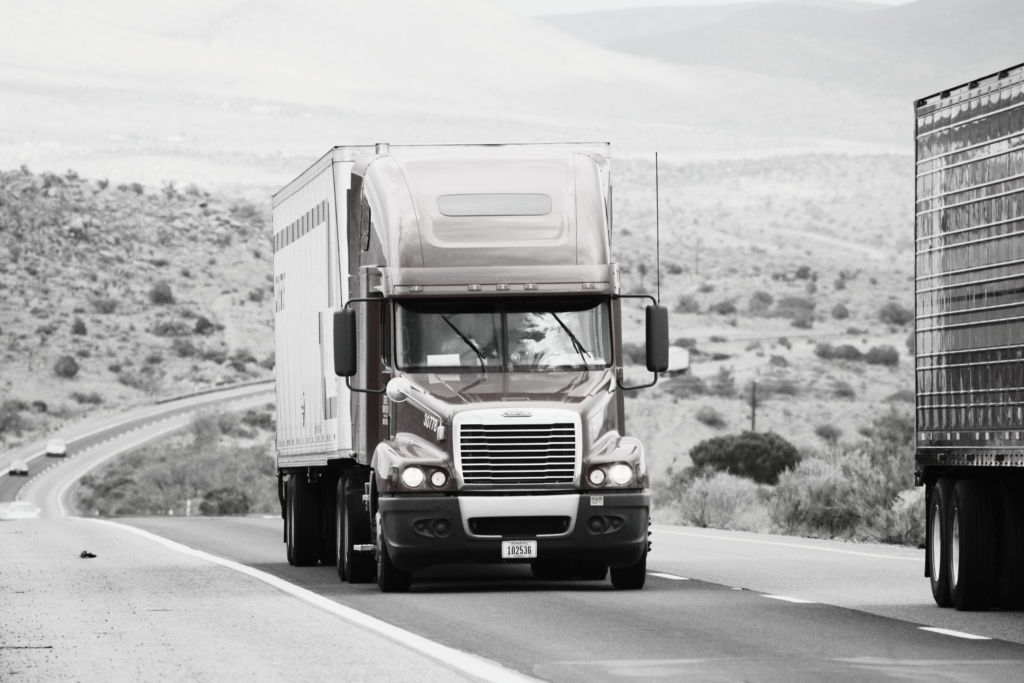
Nearly every good consumed in the U.S. travels on a truck at some point, whether it’s a semi-trailer, a flatbed truck, a box freight truck, or even a delivery truck. Because of their size and the large loads they carry, crashes involving a truck can result in serious injuries and high-dollar property damage. Here, we’ll provide advice on what to do if you or a loved one is in a crash involving a truck in New Mexico.
NOTE: If you are reading this on your phone at the scene of an accident, scroll down to “The Details of What to Do Immediately After the Accident” below.
A Summary of What to Do After a Car Accident Involving a Truck
If you or a loved one has been in a truck accident, there are certain steps you should take to ensure that everyone is safe and cared for, and that you will be able to pursue compensation as healing begins.
- Call 911 and seek medical attention.
- Remain at the scene until police and emergency assistance arrive.
- Gather details about the truck, including its company information.
- Take pictures and video evidence, if you can.
- Report the accident to the New Mexico Department of Transportation (NMDOT) if the police do not.
- Keep copies of all accident documentation.
- Call a truck accident lawyer before filing a claim or talking to insurance companies.
What NOT to Do After a Truck Accident
- Don’t move your car unless it is blocking traffic or is unsafe to leave as is.
- Don’t refuse treatment by EMT professionals at the scene.
- Don’t move any accident victim who is severely injured.
- Don’t yell at or engage with the other driver.
The Details of What To Do Immediately After an Accident with a Truck
What you do immediately after a car accident will have important ramifications for your health and safety going forward—especially if you need to file a claim for property damage or injury.
Step 1: Call 911 and get medical attention. If anyone was injured in the accident, you should seek medical attention before anything else. A call to 911 is, in most cases, the quickest way to do this by getting an ambulance to the scene. (Note that New Mexico has a Good Samaritan Law, which obligates accident victims or witnesses to call 911 for emergency services if someone is in danger or might need care.)
The dispatcher will need to know where the accident happened, if anyone is injured, and if there are any ongoing threats or problems. Even if you don’t think you’re hurt, it’s a good idea to get checked out in case pain from injuries shows up later.
Step 2: Call the police and remain at the scene. When the officer arrives, he or she will ask you to describe the accident (and the events leading up to it) in as much detail as you can. What was the truck driver doing? Were they switching lanes or making a turn? Were they distracted (e.g., on their phone)? Did they honk? Did you? It is important to get these details on the record while fresh in your mind.
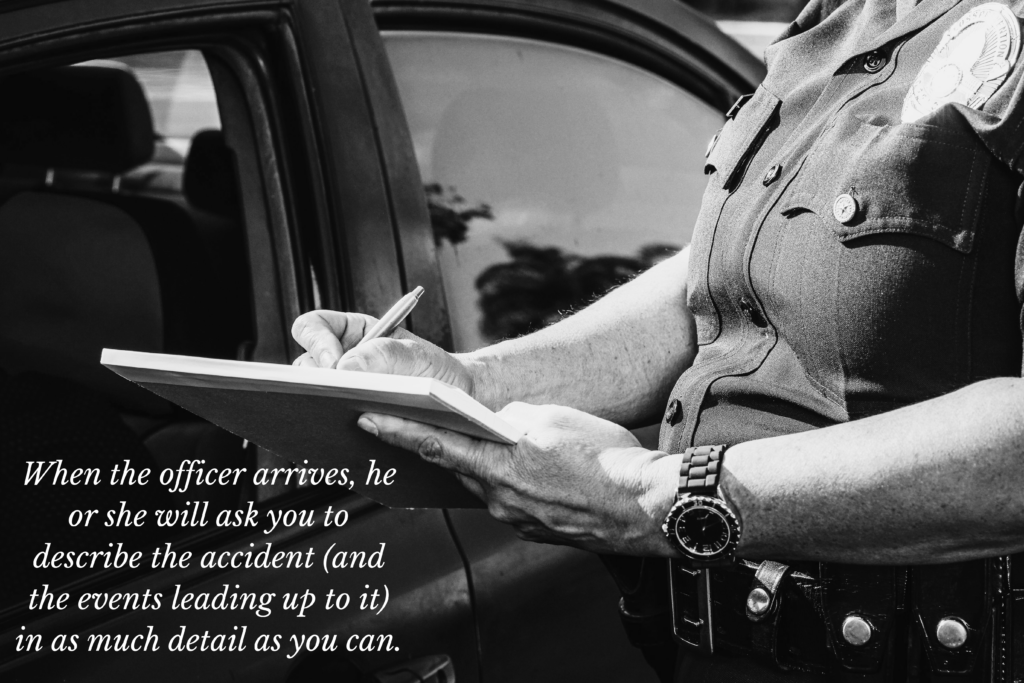
The police will file an accident report for any accident that results in injury or death, or that results in property damage of $500 or more. New Mexico law states that “the driver of a vehicle involved in an accident resulting in bodily injury to or death of any person or total property damage to an apparent extent of five hundred dollars ($500) or more shall, within five days after the accident, forward a written report of the accident to the department of transportation.” Since it’s hard to tell whether damage exceeds $500, a good rule of thumb is anything more than a scratch or small dent. If in doubt, err on the side of caution and call the police. It is better to have a report filed for a minor accident than not have the accident report, in case the cost of repairs gets out of hand.
Step 3: Gather details about the truck. If you and the truck driver are both able to talk, this is the time to jot down the driver’s name, the company they work for (if a commercial driver), and their license plate number—or, better yet, take a photo. You will also want to ask if the truck driver has a dash camera. This is becoming increasingly common in commercial trucking and could be useful as evidence.
Step 4: Take photos and video evidence. If possible, record the accident scene by taking photos or video of:
- Street signs that are close by, and that might be relevant (for example, a stop sign that might have been run)
- Damage to the vehicles
- Visible injuries you or your passengers suffered
- Skid marks
- Damage to the surrounding area (guardrails, fences, trees, street signs, etc.)
Try to take panoramic or wide-angle shots, and get photos and video from different angles. It is OK if you have many shots of the same thing—you never know what a new angle might reveal when it comes time to review the evidence.
Step 5: If the police were not called to the scene, report the accident to the New Mexico Department of Transportation (NMDoT). NMDoT has a universal form for accident reports that you can download and fill out. You should do this as soon as possible.
Step 6: Keep copies of all accident documentation. Keep photos, videos, or information you collect at the scene since it will be used as evidence. Also, ask the officers at the scene for a copy of the accident report. In New Mexico, you have three years to file a claim for bodily injury, and four years to file claims for property damage (New Mexico code section 37-1-8). Hang onto any documents, as they might be relevant.
Step 7: Call a truck accident lawyer before speaking to an insurance adjuster or filing a claim. The financial costs of a car accident can pile up fast, especially when a large truck is involved. Not only are there emergency room bills and doctors’ fees, but you might also have ongoing therapy, medical devices, and lost wages. Insurance companies will do everything they can to offer a low settlement if you speak with them before calling an attorney.
An experienced truck accident attorney will act quickly to gather evidence to support your case, including:
- The police report with accident scene analysis of skid marks, road conditions, and the position of vehicles to help reconstruct exactly what happened.
- Black box data that shows the truck’s speed at the time of impact, sudden braking, steering input, and lane movements. If a lawyer does not demand this information, the data might be deleted within days by the trucking company.
- Training logs that prove that the driver received appropriate training.
- Driver logs that will determine if the driver was on the road for too many hours, leading to fatigue that caused the crash.
- Maintenance records from mechanics and cargo loading reports from any other businesses involved, as they could be proven liable for the accident, along with the truck’s driver and owner.
A good lawyer will give you a free consultation and only get paid when you successfully win a settlement.
Reasons for Truck Accidents in New Mexico
Because of New Mexico’s busy transport routes, mountainous terrain, and unpredictable weather, fatal accidents involving large trucks are among the highest in the nation. In 2023 alone, nearly 20% of all large trucks in New Mexico were involved in fatal accidents. Many of those are likely due to one of the following types of accidents:
- Underrides. An under-ride happens when a smaller vehicle hits a truck from behind or from the side, and the end of the vehicle gets wedged under the truck.
- Lost loads and flying debris. If a truck—particularly a flatbed truck—has not secured its cargo (“load”) properly, it can come flying off the bed. This can present a hazard on the road or even hit cars directly.
- Blind spots. Trucks have larger blind spots than the average consumer vehicle, which increases the risk of collisions while on the road.
- Wide-turn crashes. Large trucks have to make turns at a 90-degree angle, which requires coming into the intersection and making a wide turn when turning right. This is often a recipe for misread cues and accidents.
- Jack-knife. A jack-knife happens when a truck bends between the trailer and the cab so that the truck appears folded. If an accident causes a trailer to jack-knife, it causes a loss of control and can turn into a very serious accident.
- Deadly rollover collisions. A truck rollover is one of the deadliest kinds of accidents involving a truck.
Your attorney will work to get to the bottom of what and who caused your accident with the truck. Determining liability will ensure you get the maximum compensation you deserve.
Contact Kane Law Firm After a Truck Accident in New Mexico
If you are looking for a truck accident attorney in New Mexico or Western Texas, please reach out to us here at the Kane Law Firm. We have experience with car accidents involving trucks, and can help you get the compensation you deserve.
Please note that this article was created for advertisement purposes, and it does not constitute any contractual legal relationship, nor imply one.