


Residents in rural areas quickly learn certain realities: Grocery runs take a little longer, an Uber becomes harder to find, and health care becomes much more challenging. That last reality becomes even more clear when a crash happens far from town.
According to research from the American College of Surgeons, emergency medical response in rural areas can take 20 minutes longer (or more) than the national average. That’s not because responders are slower or aren’t doing their jobs; rural EMS teams have significant challenges, such as:
- Limited cell coverage, adding minutes before emergency calls come through
- Enormous territories with fewer units
- Long stretches of highway before reaching the crash site
- Poorly lit country roads
After respondents arrive, medical care is delayed further due to long ambulance rides to hospitals, especially to trauma centers. Air transport can shorten that window, but helicopters aren’t always available due to weather, staffing, or distance. And if you need specialized care, the ACS research shows that transportation can be up to 40 minutes longer than the national average.
The geographic challenges of serious injury claims in rural areas can influence the way a claim unfolds. Insurance companies question gaps in care, evidence can be harder to gather, and rushing to settle can leave someone without the support they’ll need months or years down the road.
If you’ve been injured in a rural accident, you need a legal team that can help.
How Rural Realities Shape Injury Claims and Why You Shouldn’t Rush the Process
When you experience delayed medical treatment after an accident or symptoms develop slowly, insurance companies try to use those gaps to question the seriousness of an injury.
Lack of immediate evidence. Rural roads often lack nearby witnesses or businesses with security cameras, and early reports from first responders can be brief or focused on immediate safety rather than detailed injury descriptions. Hospitals in rural areas may not have advanced imaging available right away.
Missed neurological signs. Mild traumatic brain injury is frequently missed in rural areas because respondents arrive after brief neurological signs have resolved. Evidence shows that up to 70% of rural TBI cases go unrecognized after an accident because:
- Loss of consciousness can resolve within a minute or less
- Altered mental state clears up within 5 minutes
- Brief post-traumatic amnesia usually resolves within 30 minutes
When help arrives after those windows have passed, it’s easy for first responders to report that the victim seemed “fine.”
Delayed symptoms. Some head injuries, spinal trauma, and internal damage are internal injuries that can evolve over time, especially when adrenaline masks early warning signs. It’s common for people to feel “mostly okay” at the scene, only to develop headaches, dizziness, and pain days later. Insurers sometimes point to these delayed symptoms as a reason to undervalue a claim, so it’s important to follow up with medical providers promptly no matter how good you feel after an accident.
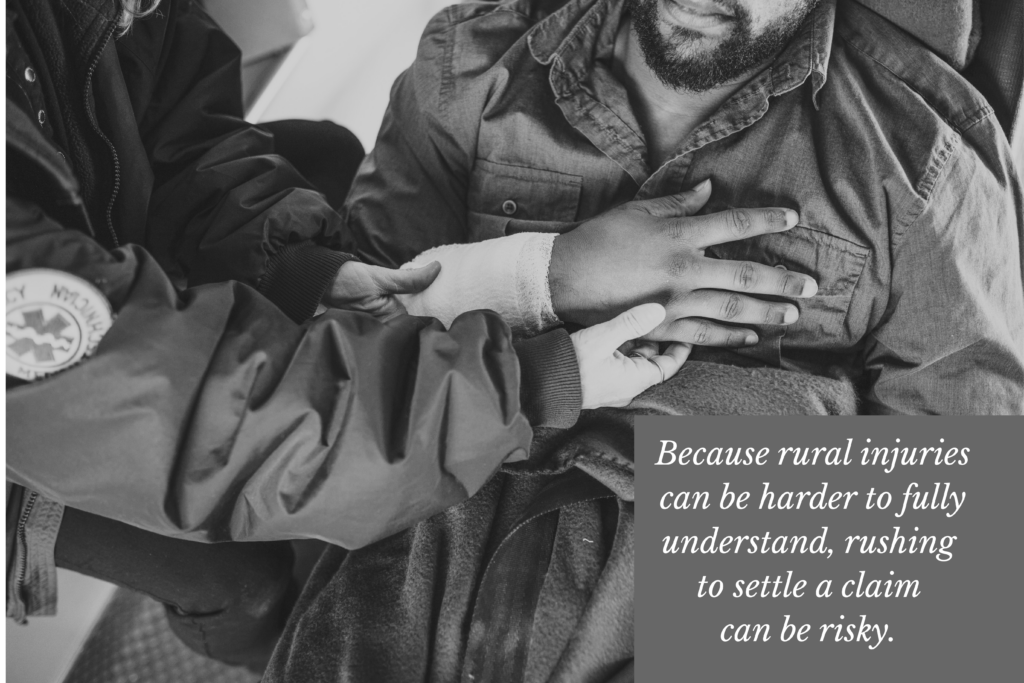
Because rural injuries can take longer to fully understand, rushing to settle a claim can be risky. Accepting an early offer before long‑term effects are known may leave you without the resources needed for future treatment, therapy, or lost income. A careful, patient approach ensures that the full impact of the injury is recognized.
With the right guidance, rural delays and documentation gaps can be explained clearly and effectively. Your location shouldn’t limit your recovery or your ability to pursue a fair outcome, and a legal team familiar with rural cases can help make sure it doesn’t.
Rural Accident Injury Claims are Navigable With the Right Help
If you live or travel in southern New Mexico or rural Illinois, you’re more susceptible to accidents with drunk drivers, weather-related collisions on untreated roads, farm vehicle accidents and more. When an accident happens, you should not have to navigate your legal settlement alone.
A legal team experienced in rural and semi rural crashes knows how to bridge these gaps. That might mean:
- Reconstructing the timeline of the crash when no one else was around to see it
- Gathering alternative forms of evidence
- Working with medical experts who understand TBIs and delayed symptoms
It also means pushing back when insurance companies try to undervalue your claim.
With careful handling, clear documentation, and a team that understands the unique challenges of rural injuries, you can move forward with confidence — and without feeling like the deck was stacked against you from the start.
If you need help with rural accident injury claims, contact our law office today. We understand those rural realities and stand ready to help.