Without the protective covering of a motor vehicle, bicyclists often suffer catastrophic injuries as a result of crashes with other vehicles. According to the National Highway Traffic Safety Administration, there were 1,103 bicyclists killed in traffic crashes in 2024. In New Mexico, 7 people died in bicycle accidents, while more than 200 were injured.
Knowing the most common causes of bike accidents can help riders avoid dangerous scenarios. If you or a loved one has been injured while on a bike, learn your rights and who to call for help.
What Causes Bicycle Accidents in Las Cruces?
A car or truck is obviously much larger and heavier than a bicycle. This becomes especially dangerous when a negligent driver gets behind the wheel. Here are some traffic scenarios that lead to collisions with bikes:
Drivers Failing to Yield at Intersections
Drivers often underestimate the speed of a cyclist at an intersection. The cyclist could be riding straight through, yet the driver makes a left- or right-hand turn right in front of the bicycle. Many times, a bicyclist is caught off guard and doesn’t see the collision coming, leading to catastrophic injuries. Around 29% of bicycle accident deaths occur at intersections.
Drivers Opening Car Doors Without Checking Their Surroundings
Often called “Dooring,” these collisions occur when a car door is opened into a cyclist’s path.
Drivers are responsible for checking their surroundings before opening their doors to avoid hazardous situations, including cyclists approaching the side of the car from ahead or behind. When bicyclists are injured by a suddenly opened car door, they can suffer severe injuries to their head, neck, and back. Or they may be thrown from the bike, leading to broken bones and other traumatic injuries that require extended medical care.
Failing to Provide Enough Room for Riders in Bike Lanes
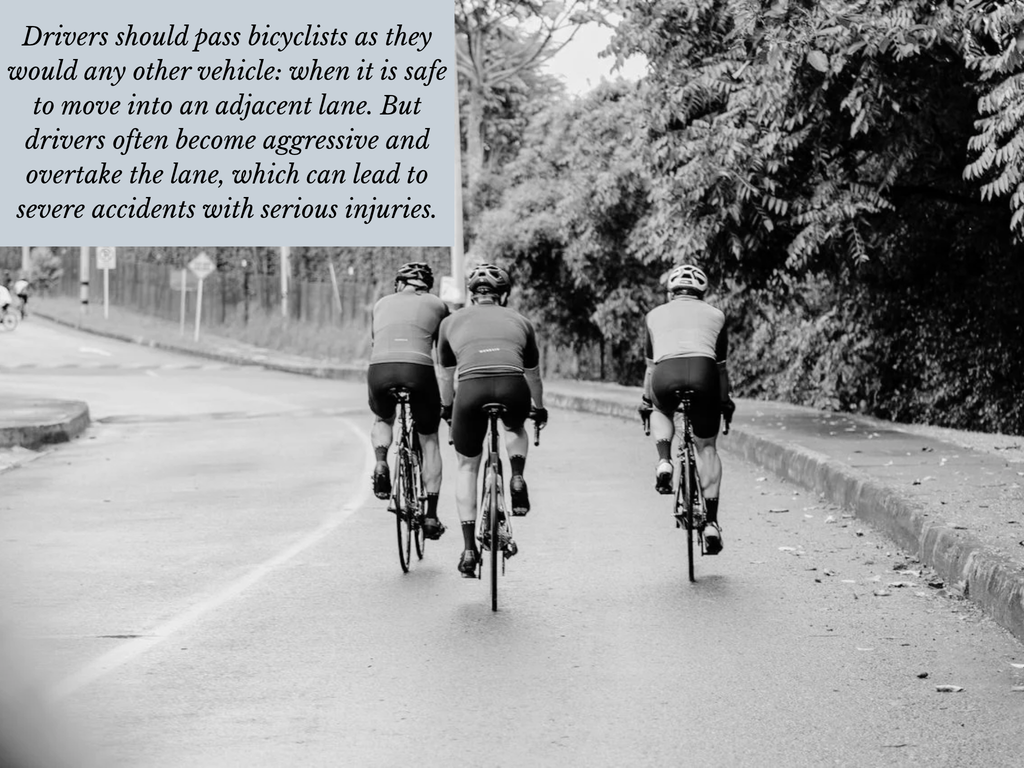
Although New Mexico has hundreds of bike paths and bike lanes, many drivers pass too closely, failing to give riders enough room to remain safe. Drivers should pass bicyclists as they would any other vehicle: when it is safe to move into an adjacent lane. But drivers often become aggressive and overtake the lane, which can lead to severe accidents with serious injuries.
Driving Under the Influence
New Mexico’s high incidence of drug and alcohol abuse can take a toll on bicyclists, just as it does for pedestrians. As the seventh worst state for drunk driving, intoxicated motorists are likely to have slowed reaction time when approaching a bicycle. In 2024, a Las Cruces woman under the influence of cannabis and alcohol hit a man on a mountain bike who was pulling a small trailer on a sidewalk. In 2025, a drunk driver hit and killed two bicyclists in San Juan County. There is a long list of these cases through the years, proving that cyclists are at risk throughout the state.
What Injuries Are Cyclists Prone to in Bike Accidents?
Bicycle collisions often expose cyclists to direct impact with vehicles, pavement, or stationary objects. Many of the critical injuries may require extensive medical procedures, rehabilitation, and extended time off work.
Brain injuries. Bicycle helmets reduce the risk of head and brain injuries significantly, but concussions, skull fractures, and severe traumatic brain injuries can still occur.
Spine injuries. Severe impacts can damage vertebrae and the spinal cord, occasionally resulting in partial or complete paralysis.
Broken bones. Broken collarbones, wrists, hands, arms, and ribs are common when a cyclist is thrown from their bike or reaches out to brace a fall. Leg, pelvis, and hip fractures also occur when hit by a car.
Soft tissue injuries. Ligament sprains, muscle strains, and tendon tears frequently affect the wrists, ankles, knees, and shoulders. These can turn into chronic pain conditions if left untreated.
Facial trauma. Impact with the ground or handlebars can cause jaw fractures, broken noses, lost teeth, and deep facial lacerations.
Internal Injuries: Blunt force trauma from handlebars or vehicles can cause damage to organs or internal bleeding, which may not show immediate symptoms.
Who is At Fault in a Bicycle Accident?
Drivers and bicyclists are often unclear about who is liable when an accident between them occurs. In all 50 states, bicyclists are obligated to follow the same rules of the road as other drivers. That includes following laws like:
- First come, first served. Everyone on the road is entitled to the lane width they need. This includes space behind, to each side, and space in front. This means if a motor vehicle tries to overtake a bicycle that is rightfully using a lane, the vehicle driver is at fault if his actions cause an accident.
- Speed positioning. The slowest vehicles on the road should be the furthest to the right (unless the vehicle is in a left turn lane). Therefore, a bike should almost always be in the right lane to avoid slowing down traffic or causing a bicycle accident.
- Lane positioning. Bikes can share the same lane with other drivers. If a lane is wide enough to share with another vehicle (about 14 feet), ride three feet to the right of traffic. If the lane is not wide enough to share, “take the lane” by riding in the middle.
- Obey traffic signs and lights. Bicyclists must stop at stop signs, slow down at yellow lights, and yield to and merge into traffic just as cars and trucks must. If a bicyclist rides through a stoplight resulting in their injury, they are at least partially liable for breaking the rules of the road.
What if a Cyclist Rides into an Opening Door?
Cyclists are required by law to be in the right lane, which is near parked cars. Motorists and their passengers are responsible for checking for any cyclists and pedestrians before opening their doors.
Do Bicyclists Need to Use the Bike Lane?
Generally, bicyclists should use a bike lane when one is provided. However, a cyclist may leave the lane if they are making a left turn, if there is debris or any other hazard in the lane, if they are going around a slower cyclist, or if they can keep up with moving traffic. Motorists should always be prepared for a cyclist to move out of a bike lane.
What If a Cyclist Is Bumped by a Car?
A motor vehicle coming up behind a cyclist may not pass the cyclist until it is safe to do so. A motor vehicle driver must slow down and wait until there is enough space to maneuver around the bike or change lanes. It is not the cyclist’s responsibility to stop or get out of a motorist’s way.
How Attorneys at Kane Law Can Help
If you or a member of your family has been injured in a bicycle accident, it is important to speak to an experienced personal injury attorney about your situation. Our lawyers will examine your case to help you decide if you should file a personal injury claim. We will investigate your case and gather evidence to determine liability, including considering whether you are partially responsible for the accident or if you deserve full compensation from an at-fault driver.
There is no fee for an initial consultation, so contact us today to get started.