

Make no mistake: Pedestrian safety is still a major problem in New Mexico. Despite making a little progress with the NMDOT’s “Target Zero” initiative, the state still ranks as one of the worst in the nation for its per-capita pedestrian fatality rate.
From Albuquerque’s busy highways to the growing suburbs of Las Cruces, more people are injured while simply crossing the street or walking through a parking lot. And many of these crashes happen in places people assume should be safe, like marked crosswalks, intersections, neighborhood roads, and areas with steady foot traffic.
But as cities grow and traffic increases, pedestrians are finding themselves dealing with fast-moving vehicles, limited visibility, and roads that aren’t always safe for pedestrians. And when a person is hit by a car, the results are almost always severe. Without the protection of a car frame, even a low-speed impact can lead to bad injuries.
Legally, these cases are often complex, with visibility issues, road design, driver distraction, lighting conditions, and crossing patterns all playing a role. Understanding what truly happened often requires careful investigation, early evidence preservation, and a clear picture of the traffic conditions at the time of the crash.
Why Pedestrian Accidents are an Issue in New Mexico Cities
In New Mexico’s growing cities, several roadway and environmental factors come together in ways that make walking dangerous. Understanding why pedestrian accidents happen so often can help victims comprehend why fault requires more than a quick assumption.
High-speed roads through busy areas
Fast-moving arterial roads – Central Avenue, Coors Boulevard, and Lomas Boulevard in Las Cruces, for example – often cut directly through commercial districts, bus corridors, and residential neighborhoods. This means drivers are traveling at higher speeds, pedestrians are crossing multiple lanes of traffic, and crosswalks may be spaced far apart, encouraging mid-block crossings.
Rapid suburban growth without consistent pedestrian infrastructure
As these cities expand outward, new developments often prioritize vehicle access over walkability, often leading to:
- Missing sidewalks
- Unmarked crossings
- Limited street lighting
- Long distances between safe crossing points
Driver distraction
Smartphones, vehicle screens, and navigation systems all reduce a driver’s ability to notice someone crossing the street.
Complex urban crossing patterns
People crossing between parked cars, pedestrians stepping out from behind buses, and unmarked or faded crosswalks make it harder for drivers to know where people will be.
Speeding, aggressive, and drunk driving
Several New Mexico corridors have big issues with speeding, red-light running, and aggressive driving that put pedestrians at risk. New Mexico is also ranked seventh among the worst U.S. states for drunk driving, and alcohol was a factor in nearly 16% of all pedestrian crashes in 2024.
Why Pedestrian Accident Cases are Legally Complex
In New Mexico’s urban environments, these cases often involve multiple layers of evidence, contributing factors, and potentially responsible parties. And pedestrian cases often require gathering evidence from a wide range of places, including:
- Traffic cameras and red-light cameras
- Business and residential surveillance systems
- Bus or rideshare dash cameras
- Vehicle “black box” data
- 911 recordings and dispatch logs
- Witness statements
- Roadway design or lighting records
Some of this evidence can disappear quickly, especially video footage that may be overwritten within days.
To complicate the case further, insurance companies often dispute liability and may argue the pedestrian was outside a crosswalk or wasn’t visible to the driver. They may also claim the pedestrian was crossing against a signal or “suddenly stepped into traffic.”
Determining who’s at fault can also be a challenge. Depending on the situation, liable parties may include:
- The driver
- The driver’s employer (if they were working)
- A rideshare company (like Uber or Lyft)
- A commercial property owner (if the driver couldn’t see the area clearly)
- A city or government agency in charge of lighting, signage, or road design
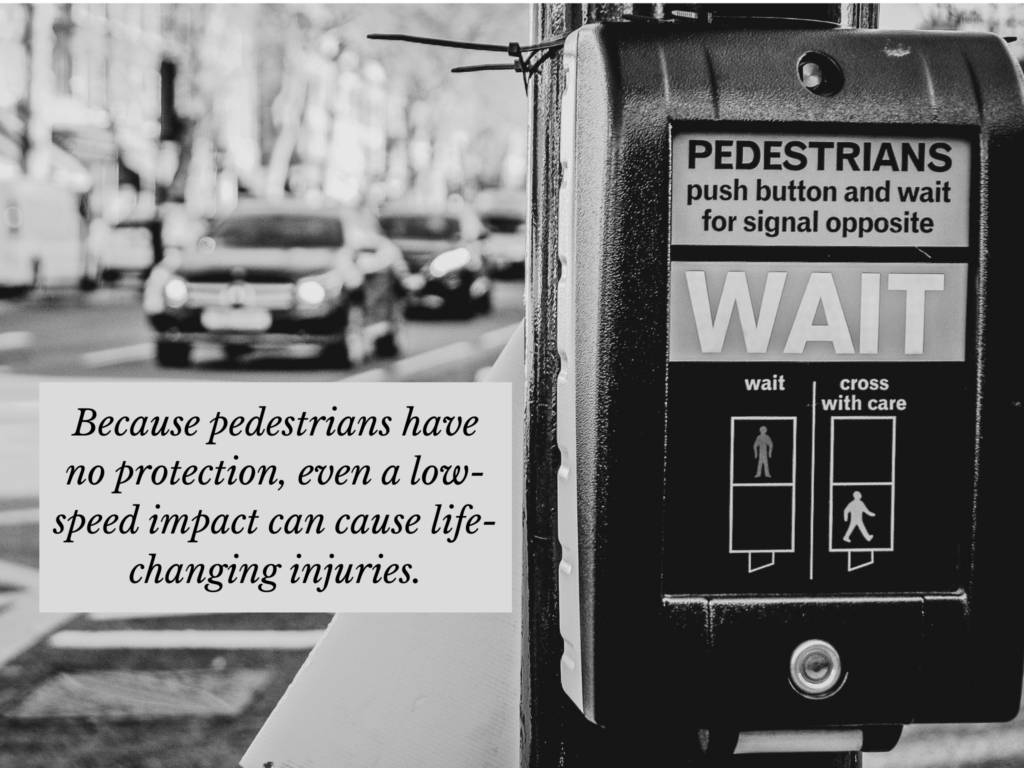
Finally, because pedestrians have no protection, even a low-speed impact can cause life-changing injuries, which is why these cases often require complete medical records, expert opinions on long-term recovery, and information about mobility limitations, pain, and future care needs.
What Injured Pedestrians Should Do After a Crash
Taking a few key steps early on can help protect your health, preserve important evidence, and give you a clearer path forward if you decide to pursue a claim:
- Get medical care right away – Early treatment protects your health, and medical records created right after the crash become important evidence. Also, keep notes about your pain, mobility issues, missed work, and daily limitations.
- Report the crash to law enforcement – Make sure officers know where you were walking and what you saw or heard.
- Preserve evidence – If possible, keep photos of the scene, vehicle, and your injuries; the clothing and shoes you were wearing; contact information for witnesses; and any debris or damaged personal items.
- Be cautious with insurance adjusters – Remember that you’re not required to give a recorded statement, and try not to guess about what happened or downplay your injuries.
- Contact an attorney early – Pedestrian cases often involve time-sensitive video footage, witnesses who may be hard to locate later, lighting conditions that need to be documented, and insurance disputes. An attorney can begin preserving evidence right away.
How Kane Personal Injury Supports Pedestrian Accident Victims in New Mexico
When someone is hit while walking, the right legal support can make a big difference. At Kane Personal Injury, our team has experience handling pedestrian accidents throughout Albuquerque, Las Cruces, Santa Fe, Rio Rancho, and other New Mexico communities where urban growth and heavy traffic create challenges for people on foot. We know how to gather the right evidence, like video footage, witness statements, road design information, and detailed medical documentation that shows the full impact of the injuries.
We work with accident reconstruction experts, doctors, and investigators when needed, and we handle communication with insurance companies so injured pedestrians can focus on healing rather than defending themselves.
If you or a loved one has been injured while walking, we’re here to help you understand your options and protect your rights. Contact us today.