

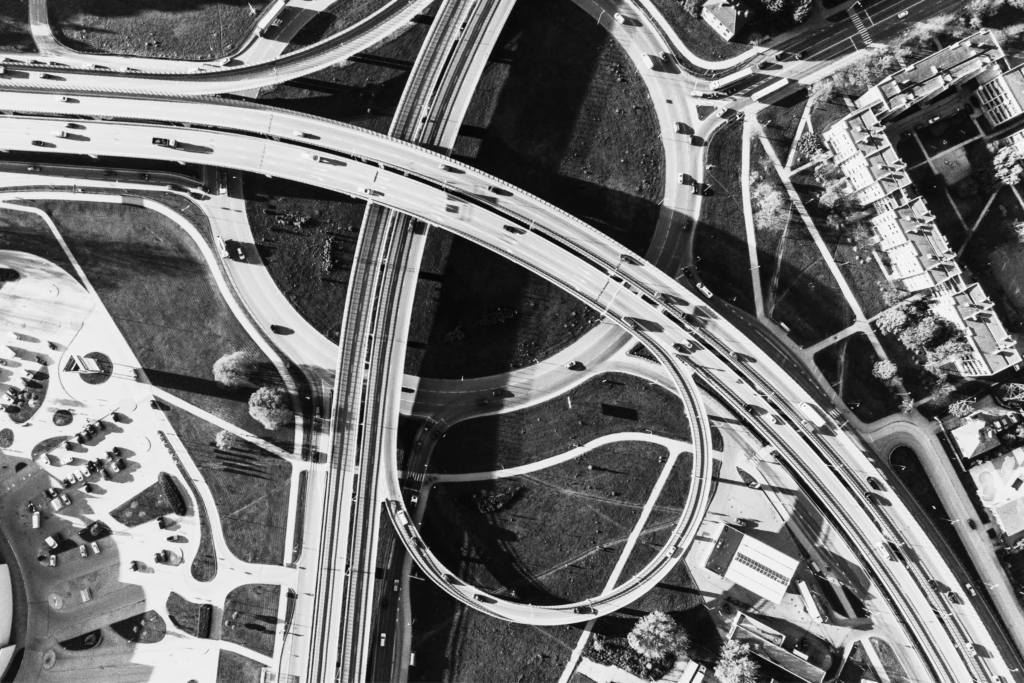
The New Mexico Department of Transportation (NMDOT) recently launched an extensive study of the “Big I” – the I-40 & I-25 Interchange in Albuquerque – to take a closer look at the significant congestion that often leads to a higher likelihood of crashes in the area.
Albuquerque drivers experienced the dangers of the Big I firsthand last November, when an injury crash on eastbound I-40 near the I-25 interchange brought traffic to a standstill and required a multi-agency emergency response. Incidents like this are common, and highlight a reality many victims don’t realize until it’s too late: Interchange crashes involve unique roadway designs, overlapping state and federal oversight, and evidence that can disappear in days if not preserved.
For anyone injured in an interchange or bridge accident in New Mexico, understanding these differences is critical. The more complex the roadway, the more complex the legal claim and the more important it becomes for you to act quickly to protect your rights.
Why Overpass and Interchange Crashes are Unique
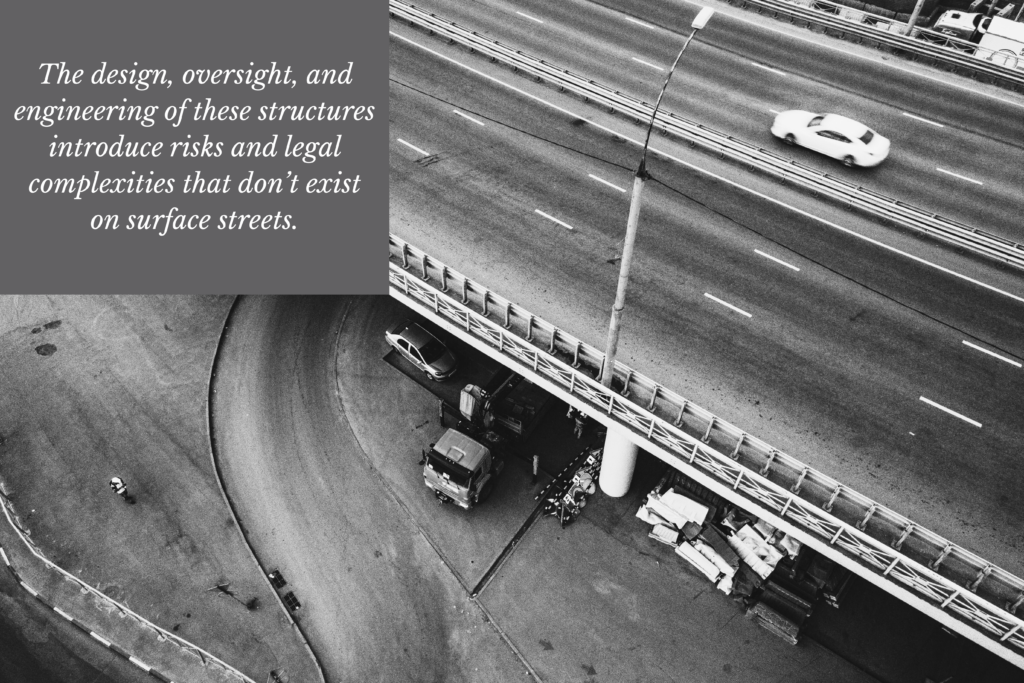
Crashes on overpasses and major interchanges aren’t just “bigger versions” of standard roadway accidents. The design, oversight, and engineering of these structures introduce risks and legal complexities that don’t exist on surface streets.
Higher risks from multi level roadway design. Overpasses and interchanges stack traffic across multiple elevation levels, which changes how crashes unfold and how dangerous they become. A collision on an elevated roadway can send vehicles into guardrails, down embankments, or even over the edge. In addition, tight curves and short merge windows reduce reaction time, which means drivers have less space to correct mistakes or respond to unexpected stops or lane changes — often leading to a multi-vehicle pileup.
Overlapping state and federal oversight. Unlike standard city streets, major interchanges often fall under multiple jurisdictions. While NMDOT may oversee the roadway surface, signage, and barrier maintenance, the Federal Highway Administration sets design and safety standards for interstates. The city of Albuquerque may also be involved when ramps, frontage roads, or city maintained connectors intersect with the interchange. This overlap affects everything from who maintains guardrails to which agency holds critical records. When a crash occurs, determining responsibility isn’t always straightforward, and that uncertainty can delay or complicate a claim.
Maintenance, guardrail, and barrier design issues. Crash cushions, reflectors, and lane markings require regular maintenance to remain effective. Outdated or damaged barriers can fail under impact. Because these structures are so specialized, any failure raises questions about design compliance, maintenance history, and whether contractors or agencies met their obligations.
How Evidence Works Differently in Interchange and Overpass Accidents in Albuquerque and Surrounding Areas
Just as overpass and interchange crashes are different, evidence-gathering is also unique. These cases involve more agencies, more technical documentation, and more sources of digital data. If no one steps in to preserve the evidence, much of it can disappear quickly.
Camera and Video Evidence. Major interchanges often have multiple layers of camera coverage, including state DOT traffic cameras and city-operated cameras on ramps, frontage roads and feeder lanes. Construction contractors may have also installed temporary cameras in work zones, and private dashcams from nearby drivers may provide additional angles. While these can all be invaluable in reconstructing what happened, the challenge is that many of these systems overwrite footage within days. Without quick action, critical video evidence can be lost permanently.
Multi Agency Involvement. The paper trail also can become more complex, as a crash at a major interchange often triggers responses from several agencies, each generating its own documentation. This multi agency involvement means victims may need to obtain multiple police reports and other paperwork, each containing different pieces of the puzzle.
Private Contractors and Crews. Interchanges are often hot spots for contractors and maintenance crews, which means these private companies may hold key evidence, including guardrail and barrier repair logs, pavement maintenance records, work zone safety plans, lane closure permits, and inspection reports. These documents aren’t part of standard police reports, and they’re not always easy to access without legal intervention. Yet, they can reveal whether a design flaw, maintenance lapse, or construction issue contributed to the crash.
Reconstruction Experts. Reconstructing a crash on an overpass or multi level interchange requires specialized expertise. Experts must analyze elevation changes, vehicle trajectory, barrier performance, visibility, curves in the road, length of merge lanes, and more. If there was a multi-vehicle pileup, the analysis can get even more complicated.
What Victims Should Do Early After an Interchange or Bridge Accident in New Mexico
The steps you take in the first few days after a crash can impact the strength of your claim significantly.
Contact a Personal Injury Attorney
Legal counsel must get involved quickly to:
- Send preservation letters to state agencies and contractors
- Send demand letters to insurers
- Request police reports from various agencies
- Request traffic camera footage before it’s deleted
- Secure maintenance logs, inspection records, and work zone documentation
- Coordinate with experts who can evaluate barrier performance, roadway design, or visibility issues
Seek Medical Attention and Document Injuries
Early medical care and documentation helps identify hidden injuries such as concussions, spinal trauma, or internal damage. It also helps establish a clear timeline linking injuries to the crash and prevents insurers from arguing that symptoms developed later for unrelated reasons.
Avoid Speaking to Insurance Adjusters
Remember: Interchange crashes often involve multiple vehicles and multiple insurers, and each insurer has an incentive to shift blame away from their driver and may contact victims quickly to gather statements. Speaking with adjusters too early can lead to statements taken out of context, create confusion about fault, and undermine the value of your claim.
Preserve Your Own Evidence
Make sure to keep photos or videos, contact information of witnesses, notes about weather or unusual roadway conditions, and any documentation of vehicle damage before repairs begin.
Why Local Experience Matters in Complex Interchange and Overpass Accidents
Complex crashes like multi-car pileups and bridge accidents demand a different level of investigation, coordination, and technical understanding than standard roadway accidents. This is where Kane Personal Injury’s experience makes a meaningful difference.
You don’t have to navigate the aftermath of this kind of crash alone. Early legal involvement can protect your rights, preserve critical evidence, and position your claim for the strongest possible outcome. Kane Personal Injury is here to help you move forward with the support, experience, and local insight these complex cases demand.