After an accident, fault is not always as clear as it first appears. Maybe another driver ran a red light, but you were speeding. Maybe you fell because a business failed to address a dangerous condition, but the insurance company says you should have seen it. Maybe everyone agrees someone else caused the accident, but the insurer still argues that your actions made your injuries worse.
Being partly responsible does not necessarily prevent you from recovering compensation in Illinois.
Can I Still Recover Compensation If I Was Partly at Fault?
Yes. Under Illinois law, an injured person can generally recover damages when their share of fault is 50% or less.
The amount recovered is reduced according to that percentage. “Fault” here means your share of what caused the injury or damage, not only the crash or fall itself. It’s compared against the combined fault of everyone whose conduct contributed.
For example, suppose you suffer $100,000 in damages after a car accident:
- If you are 10% at fault, you could recover $90,000.
- If you are 25% at fault, you could recover $75,000.
- If you are 50% at fault, you could recover $50,000.
- If you are more than 50% at fault, Illinois law bars recovery.
This rule is known as modified comparative negligence, sometimes called the “51% bar” rule.
The rule can apply to many negligence cases, including car crashes, falls, and other accidents where the injured person and another party may both have contributed to the injury. When fault is shared, the next question is how much responsibility belongs to each person. That is often where an otherwise straightforward injury claim becomes more complicated. Cases involving more than one at-fault party add another layer. Under Illinois law, every defendant found liable can be responsible for the injured person’s full medical expenses. A defendant found 25% or more at fault can be responsible for all other damages as well, while a defendant below 25% generally pays only its own share of those other damages.
Why Your Percentage of Fault Matters to the Insurance Company
Every percentage point assigned to you can reduce what an insurance company has to pay. The Illinois Department of Insurance explains that insurers may review statements from the people involved, witness accounts, accident reports, and other evidence when evaluating comparative negligence. An adjuster may use that evidence to argue that you share responsibility for the accident. There are limits, though. In car accident cases, Illinois law provides that failing to wear a seat belt is not evidence of negligence and cannot be used to reduce your recovery, a protection that sets Illinois apart from some other states.
Consider a collision where another driver runs a stop sign while you are traveling a few miles over the speed limit. The other driver’s insurer might accept that its driver caused most of the crash while arguing that your speed also contributed.
How much responsibility should that carry? Five percent? Twenty percent? None?
The answer can substantially affect compensation. If an insurer successfully assigns you 20% of the fault in a claim involving $100,000 in damages, your potential recovery could fall by $20,000.
But the insurance company’s assessment is not necessarily the final word. A fault percentage in a settlement offer reflects the insurer’s position on the claim, and you can challenge that position with evidence. Parties may negotiate comparative negligence. If they cannot agree, a judge or jury can ultimately decide the issue.
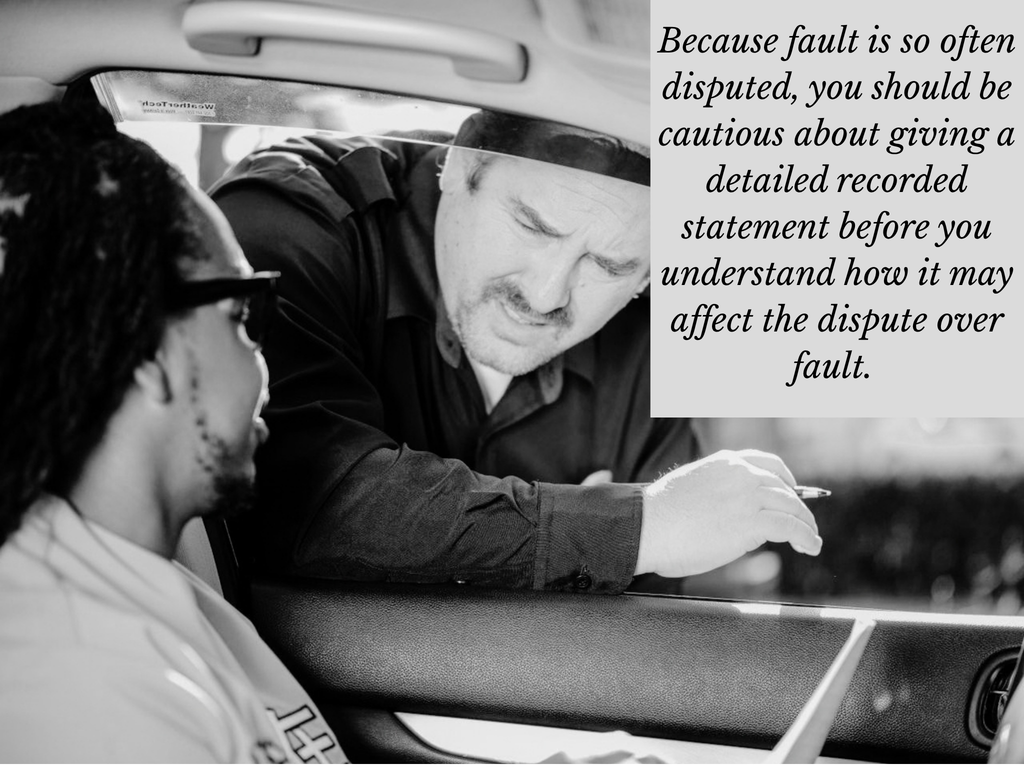
Because fault is so often disputed, you should also be cautious about giving a detailed recorded statement before you understand how it may affect the dispute over fault. An adjuster may compare what you say shortly after the accident with other evidence that emerges later, and even an innocent inconsistency can factor into the insurer’s evaluation.
That makes the evidence behind the fault determination especially important. Police reports, witness statements, photographs, video, vehicle damage, and other records may support a very different account of how much each person actually contributed to the accident.
How Can a Lawyer Fight an Unfair Shared-Fault Argument?
A personal injury lawyer can determine whether the insurance company’s version of the accident matches the evidence.
That can involve gathering information such as:
- Police and accident reports
- Photographs and video from the scene
- Traffic or surveillance camera footage
- Witness statements
- Vehicle damage
- Cellphone records when distracted driving is suspected
- Medical records
- Expert analysis or accident reconstruction in appropriate cases
- Event data recorder (“black box”) and other vehicle data
The purpose is to establish how the accident happened and how much each person’s actions contributed to the injuries.
For example, an insurer might focus on the fact that an injured driver was speeding. An investigation could show that the other vehicle entered the intersection so suddenly that the collision would have occurred even at the posted speed limit.
In another case, a property owner might argue that a dangerous condition was obvious, and that the injured person should have avoided it. Photographs, surveillance footage, maintenance records, or witness testimony could provide a very different picture of what someone reasonably could have seen before the fall. These details can affect how fault is ultimately divided.
What Should I Do If an Insurance Company Says I Was Partly at Fault?
If an insurance company says you should share the blame, don’t assume their percentage is automatically correct. Preserve any evidence you have from the accident, including photographs, videos, witness information, medical records, and communications with the insurance company. Keep deadlines in mind: most Illinois personal injury lawsuits must be filed within two years of the injury, and claims against government entities can have shorter notice and filing deadlines.
Most importantly, have an attorney review the circumstances if fault is disputed or the injuries are significant. A personal injury lawyer does more than submit paperwork to an insurance company. When an insurer tries to shift responsibility onto an injured person, the attorney can examine the evidence, identify weaknesses in that argument, and advocate for a fair assessment of what actually caused the accident.
If you were partly responsible for an accident in Illinois, that does not automatically end your personal injury claim. The percentage of fault assigned to you can have a major effect on your compensation, which makes getting that determination right especially important. An Illinois personal injury attorney can evaluate the evidence and challenge attempts to place an unfair share of the blame on you.atter how severe your injuries may be. If you’ve been injured in Illinois, don’t leave your compensation to chance.

A knowledgeable lawyer can help you gather the right evidence, handle negotiations, and ensure you receive the settlement you deserve. Contact Kane Personal Injury today for a free, no-obligation consultation.