

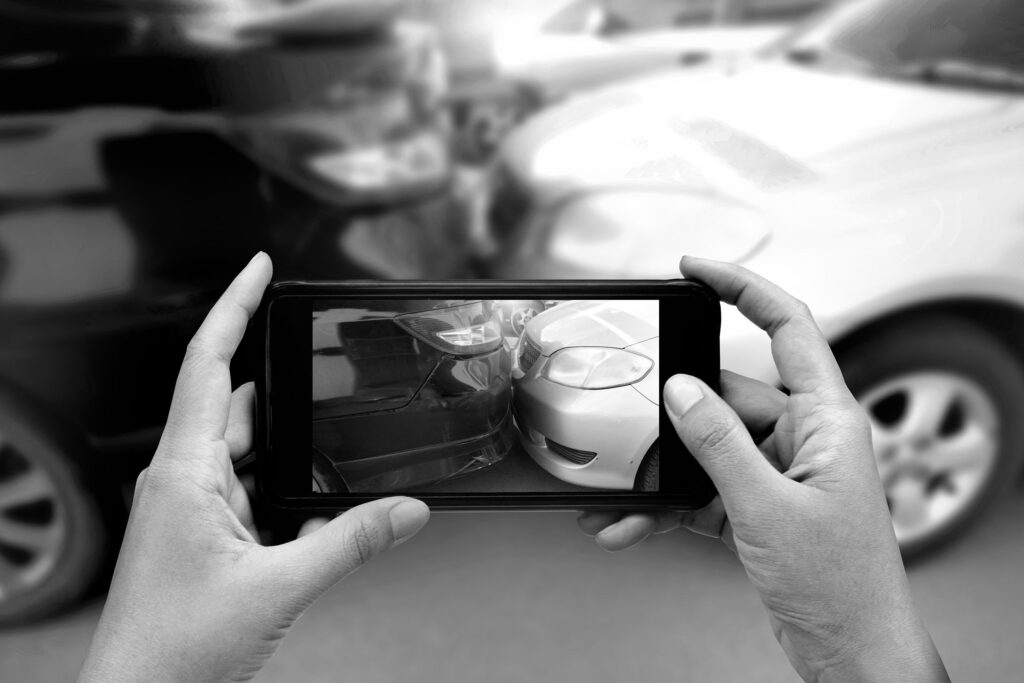
Injury cases used to start with a simple question: “What happened?” Attorneys pieced together answers from driver and witness memories, police reports, and whatever could be reconstructed after the fact. Today, the story often begins differently — because the incident was already recorded before anyone had a chance to speak.
Doorbell cameras, retail surveillance systems, dashcams, literally every bystander with a smartphone: Even if we don’t always like it, we’re nevertheless quite aware that we now live in an era where nearly every accident has a digital audience. (In fact, some of that uneasiness was on display in the form of public backlash after a recent Ring Super Bowl ad showed just how widespread video surveillance could be by tapping into the plethora of cameras in a given neighborhood.)
Now, more than ever, you need a lawyer who understands how to evaluate whether AI footage can be trusted.
The Hidden Complexity Behind AI Video Enhancement
After an accident, traditional video footage can reveal details that memory simply can’t: the speed of an approaching vehicle, the timing of a light change, the angle of impact, or whether a driver appeared distracted. It can confirm what happened or contradict what someone later claims. But raw footage is only
the beginning.
A growing number of software tools can now dramatically improve video footage by clarifying images, but this technology comes with a caution flag. Some enhancement tools actually alter the full picture by:
- Sharpening edges that were never truly visible
- Filling in missing pixels
- Creating the illusion of detail that wasn’t captured in the original image, a phenomenon known as “AI hallucinations”
Courts across the country are beginning to scrutinize whether AI-processed footage represents reality or crosses the line into fabrication. When video file sizes balloon dramatically, for example, judges may question whether the “enhanced” version is admissible at all.
The result is a strange paradox: We have more evidence than ever, but it requires more expertise to evaluate. That’s why victims need a lawyer who understands not just how to obtain footage, but how to analyze it, challenge it, and explain it clearly.
Why You Need a Lawyer Who Understands Surveillance Footage
Video may feel like the ultimate truth-teller, but it’s only as reliable as the person interpreting it. A clip can show what happened yet be misunderstood (or misrepresented) if the viewer doesn’t understand angles, timing, perspective, or the limits of the original technology.
Here’s why you need an expert:

- Video alone doesn’t tell the whole story – A wide-angle doorbell camera can distort distance. Dashcam accident footage can exaggerate speed. A low-mounted camera might miss a driver’s line of sight entirely. And when AI tools are used to “enhance” footage, the risk of misinterpretation grows. What looks like a definitive detail may actually be an artifact of the software, not something the camera ever recorded.
- Misinterpreting footage can shift blame – If an AI enhancement tool sharpens an image that was originally blurred, it may create the illusion of certainty where none existed. If a lawyer doesn’t understand how perspective affects speed or distance, for example, they may draw the wrong conclusion (or allow the opposing side
to do so). - Kane Personal Injury treats video evidence in a personal injury case as one piece of a larger puzzle. We understand understand how to: integrate video with witness statements, physical evidence, and accident reconstruction. This builds a complete, accurate account of what happened.
Why Judgment Still Matters Most
Cameras and AI tools have transformed the way injury cases unfold. Today, the question isn’t whether an incident was recorded but instead how many angles captured it and how clearly the story can be pieced together. That’s a major advantage for victims, especially when memory is shaken or details are disputed. However, it also introduces new challenges, like footage that disappears quickly, enhancements that go too far, and interpretations that can shift the narrative.
That’s why early evidence collection is essential and why the right lawyer matters just as much as the video itself. At Kane Personal Injury, the team understands how to find footage, preserve it, analyze it, and challenge it when necessary. Contact one of our attorneys today to get the help you need.