Albuquerque is where much of New Mexico’s traffic comes together. I-25 and I-40 cross near the center of the city at the Big I, connecting two of the state’s busiest highways. Tens of thousands of commuters use that interchange each day, while traffic from Rio Rancho, Los Lunas, Bernalillo, and other surrounding communities flows into Albuquerque for work, school, medical care, shopping, and other everyday trips.
That traffic does not stay on the interstates. Major streets such as Central, Coors, Paseo del Norte, Montgomery, and San Mateo carry cars, trucks, buses, motorcycles, cyclists, and pedestrians through the same urban network. Albuquerque has been investing in pedestrian crossings, bicycle improvements, traffic calming, and other Vision Zero projects because the way people move through the city creates real safety challenges.
Most days, all of that movement is simply part of living in New Mexico’s largest city. But when something goes wrong, the setting can make a serious accident harder to sort out. A collision at the Big I may involve several vehicles or a commercial truck. A pedestrian crash may happen along a busy arterial where vehicles, transit, and foot traffic all meet. A bicycle or motorcycle accident can turn on details about lanes, turns, visibility, or where each person was positioned before the collision.
Kane Personal Injury helps people in Albuquerque and the surrounding metro area after serious accidents and injuries. We represent people hurt in car and truck crashes, motorcycle, bicycle, and pedestrian accidents, bus crashes, dog attacks, unsafe-property incidents, brain and spinal injuries, airplane accidents, wrongful death, and other serious injury cases.
You do not need to know what kind of legal claim you have before contacting us. Tell us what happened, and we can help you understand what needs attention next.
Frequently Asked Questions About Accidents in Albuquerque
(To see the answer to a specific question, hit the triangle next to it to expand.)
Why can traffic accidents in Albuquerque be especially complicated?
Albuquerque is the point where I-25 and I-40 meet, bringing together local traffic, commuters, commercial trucks, and long-distance travelers from across the metro and the state. The Big I is one of the busiest and most complex interchanges in New Mexico, with frequent merging, lane changes, and congestion around its approaches and ramps.
A serious crash in this environment may involve several vehicles, a commercial carrier, or drivers coming from outside Albuquerque. Figuring out what happened can require looking beyond the police report to lane position, roadway design, witness accounts, vehicle damage, electronic data, and, when a truck is involved, company and driver records.
Why are pedestrian accidents such a serious issue in Albuquerque?
Pedestrian safety has been a persistent problem across the Albuquerque metro. The area regularly sees serious and fatal crashes involving people on foot, which is one reason the city and regional transportation agencies continue to invest in safer crossings, traffic calming, and other Vision Zero projects.
When a pedestrian is hit, details such as the crossing location, traffic signals, visibility, vehicle speed, turning movements, and whether photographs or video exist can become important in understanding what happened.
What makes Central Avenue and other major corridors difficult for pedestrians and cyclists?
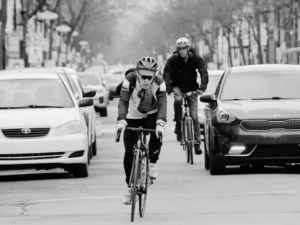
Central Avenue carries several kinds of traffic through the same corridor, including cars, buses, pedestrians, and cyclists. Other major streets around Albuquerque create similar situations where turning vehicles, transit, bike lanes, crossings, and foot traffic all interact.
After a collision, small details can matter: whether a driver was turning, where the cyclist or pedestrian was positioned, what the signal showed, whether the vehicle crossed a lane or transit corridor, and what the surrounding roadway design required.
What if I am hit while walking or biking and the driver leaves?
A hit-and-run can make the investigation harder, but it does not necessarily mean there are no options.
Police reports, witness accounts, nearby surveillance footage, traffic cameras, vehicle debris, and photographs may help identify the driver. In some cases, uninsured motorist coverage may also become relevant even when the injured person was walking or riding a bicycle.
Kane can investigate what coverage may apply rather than assuming the claim ends because the driver left the scene.
What if my accident happens outside Albuquerque but somewhere in the metro area?
Kane’s Albuquerque office is not limited to crashes within the city limits.
People regularly travel between Albuquerque, Rio Rancho, Bernalillo, Los Lunas, and other surrounding communities for work, school, medical care, and everyday errands. A serious accident may happen anywhere along those routes.
The important questions are what happened, what evidence exists, who may be responsible, and which insurance policies apply—not whether the collision occurred a few miles outside Albuquerque itself.
What if my injuries become more serious after the first few days?
Some injuries are obvious immediately. Others become clearer only after the initial shock wears off.
Head injuries may cause headaches, dizziness, memory problems, or difficulty concentrating. Back, spinal, orthopedic, and other injuries may require follow-up treatment, physical therapy, rehabilitation, surgery, or significant time away from work.
Kane looks at the full course of the injury rather than treating the first emergency-room visit as the entire story.
What if the driver who hit me does not have enough insurance?
A serious injury can cost more than the at-fault driver’s insurance policy will cover.
Depending on the circumstances, other coverage may be available. Your own uninsured or underinsured motorist coverage may apply in some vehicle, pedestrian, bicycle, or hit-and-run cases. Commercial insurance may also be relevant if the person who caused the crash was driving for work.
Kane can review the available policies and determine whether there are additional sources of coverage.
What if an accident involves an airplane or other aviation issue?
Aviation accidents require a different kind of investigation from an ordinary motor-vehicle crash.
Questions may involve pilot decisions, aircraft maintenance, mechanical failures, air-traffic control, airport operations, or the aircraft itself. Federal agencies such as the National Transportation Safety Board may also become involved in investigating what happened.
Samuel Kane is a licensed commercial pilot who is instrument rated and multi-engine rated. That background gives him familiarity with the systems, procedures, and technical issues that can arise in an aviation case.
How long do I have to file a personal injury claim in New Mexico?
New Mexico places deadlines on personal injury claims, but the correct deadline can depend on the type of case and who is involved.
Claims involving a government entity, for example, can have additional notice requirements. There is also a practical reason not to wait unnecessarily: surveillance footage can be erased, vehicles can be repaired, witnesses become harder to find, and memories fade.
Kane can review the circumstances and determine which deadlines apply.
You do not need to know whether your case is a car accident claim, a pedestrian case, a premises liability matter, or something more complicated before contacting Kane Personal Injury.
Tell us what happened. Kane can investigate the accident, preserve evidence, identify the people or companies involved, review the available insurance coverage, and help you understand what comes next.
Free consultations are available.